
Research
Brianna is the Project Coordinator for the Learning Access research project at the University of Waterloo, which is investigating female students' experiences of ADHD-related accommodations at Ontario universities. She is also a research assistant (RA) on the Reimagining Care/Work Policies project, and was previously an RA for Neurodiversity Matters. On this page, you can learn more about her research articles, presentations, and projects.
Journal Articles
-
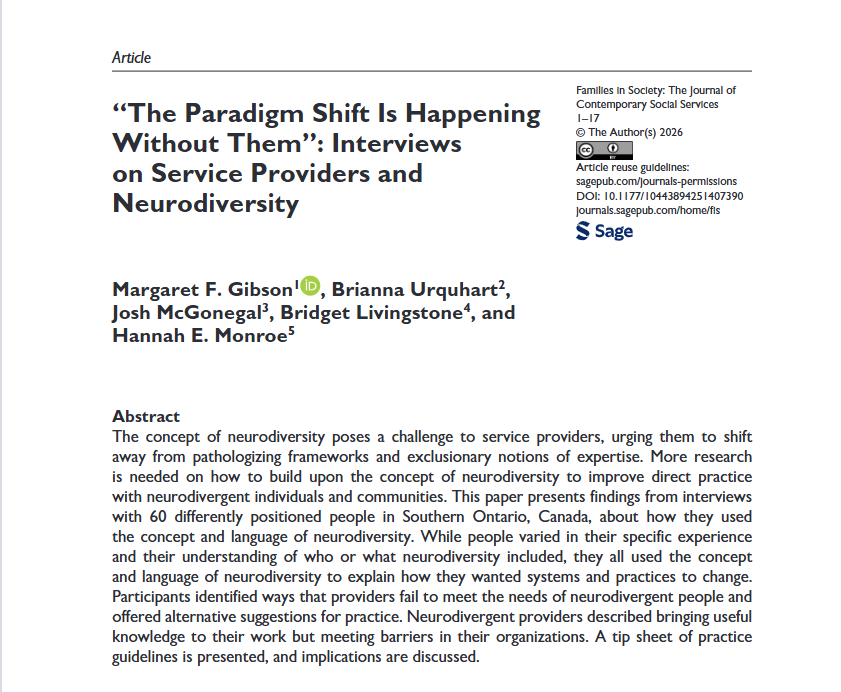
“The Paradigm Shift Is Happening Without Them”: Interviews on Service Providers and Neurodiversity.
The concept of neurodiversity poses a challenge to service providers, urging them to shift away from pathologizing frameworks and exclusionary notions of expertise. More research is needed on how to build upon the concept of neurodiversity to improve direct practice with neurodivergent individuals and communities. This paper presents findings from interviews with 60 differently positioned people in Southern Ontario, Canada, about how they used the concept and language of neurodiversity. While people varied in their specific experience and their understanding of who or what neurodiversity included, they all used the concept and language of neurodiversity to explain how they wanted systems and practices to change. Participants identified ways that providers fail to meet the needs of neurodivergent people and offered alternative suggestions for practice. Neurodivergent providers described bringing useful knowledge to their work but meeting barriers in their organizations. A tip sheet of practice guidelines is presented, and implications are discussed.
Gibson, M. F., Urquhart, B., McGonegal, J., Livingstone, B., & Monroe, H. E. (2026). “The Paradigm Shift Is Happening Without Them”: Interviews on Service Providers and Neurodiversity. Families in Society: The Journal of Contemporary Social Services, 0(0). DOI: 10.1177/10443894251407390
-
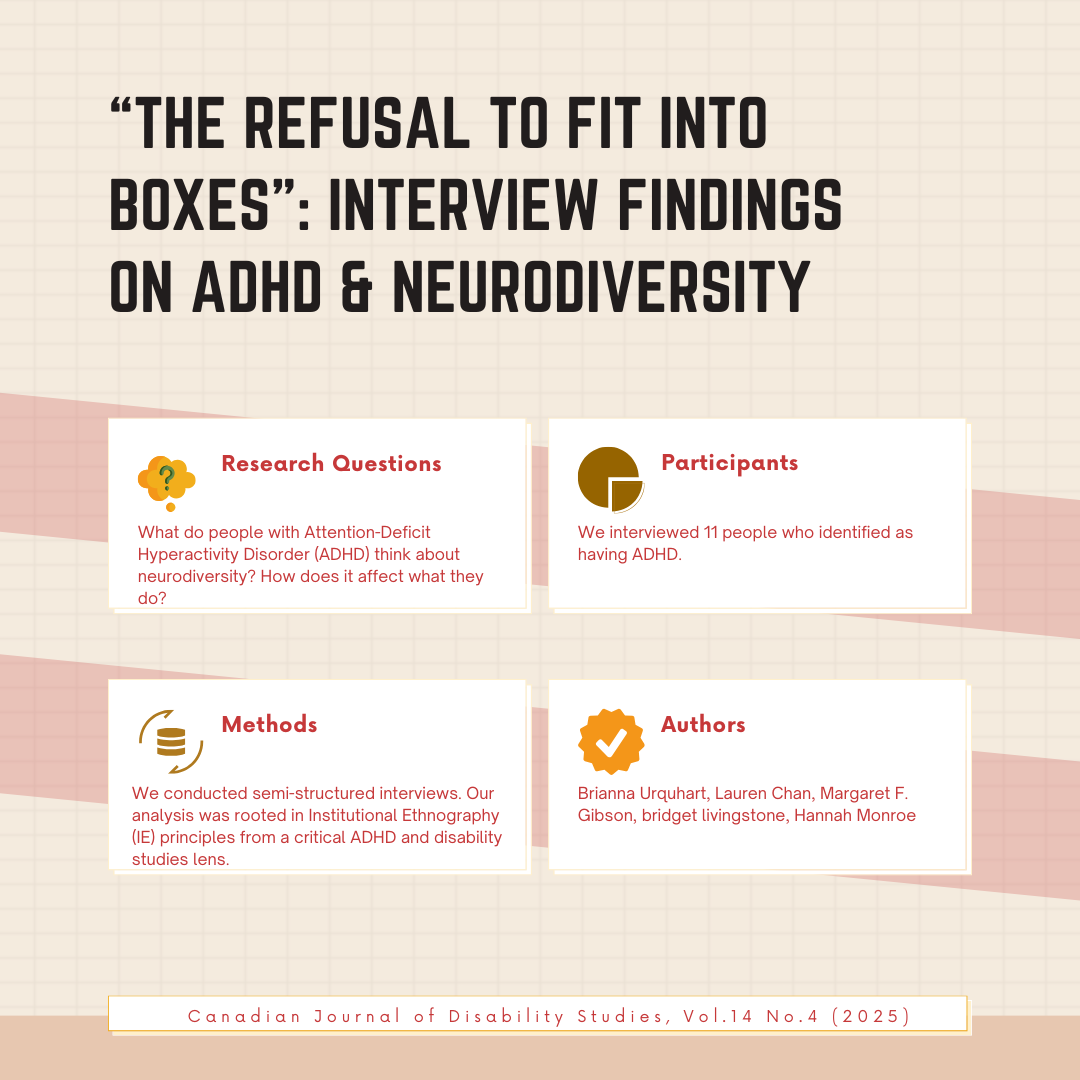
"The refusal to fit into boxes": Interview findings on ADHD and neurodiversity
What do people with Attention-Deficit Hyperactivity Disorder (ADHD) think about neurodiversity? How does it affect what they do? While a burgeoning body of scholarship has examined the concept of neurodiversity, this work has often restricted its focus to autism, or addressed more general ideas about neurodivergence. Little existing research explores what neurodiversity means to people with ADHD. This paper presents a subset of findings from a multimethod project on how people use the language and concept of neurodiversity. We examined 11 interviews with diverse participants living in Southern Ontario who all identified as having ADHD, which we analyzed using an institutional ethnographic approach. Participants shared a diverse range of ideas, feelings, relationships, and experiences with neurodiversity. For some, neurodiversity was an integral aspect of their identity or provided useful language to advocate and educate, while others expressed uncertainty or discomfort with adopting this identity. Diagnosis was highlighted as a particularly complex issue without clear agreement. We found that people understood neurodiversity through their experiences of community, especially within online and activist circles. Those who did feel connected with neurodiversity described it as an empowering lens with which to organize their lives. People with ADHD have important insights to share about neurodiversity that can inform needed changes across social domains such as education, employment, identity, and activism. We consider the implications of these findings for future research and practice.
Urquhart, B., Chan, L., Gibson, M. F., Livingstone, B., & Monroe, H. (2025). “The refusal to fit into boxes”: Interview findings on ADHD and neurodiversity. Canadian Journal of Disability Studies, 14(4), 199–229. https://doi.org/10.15353/cjds.v14i4.1300
Conference Publications
-
"Am I not disabled enough?"
Brianna Urquhart & Margaret F. Gibson
Presented at Leeds Disability Studies Conference (Leeds, UK. 04/15/26)
Abstract:
Disability has a long, painful history with scrutiny, surveillance, and stigma. This can be seen in dominant social preoccupations with concerns about validity or potential “malingering” of one’s condition to gain services, financial support, or resources, otherwise known as the “disability con” (Dorfman, 2019). While some literature has discussed the impact of this on people with disabilities or neurodivergent people, less research has examined the ongoing implications of this preoccupation in modern institutions, such as post-secondary education.
This paper presents findings from a research study on women’s experiences seeking academic accommodations related to attention-deficit hyperactivity disorder (ADHD) across universities in Ontario, Canada. We interviewed 26 female undergraduate students with ADHD from 14 universities. In spite of provincial legislation prohibiting disability-based discrimination and institutional policies promoting academic accessibility, our participants described the processes involved in trying to obtain and use accommodations as complex, uncertain, and inconsistent. Documentation requirements were demanding and variable, and costly. Some participants never received accommodations. Others had difficulty implementing previously approved accommodations. Gendered expectations, delayed diagnoses, and dominant beliefs about how ADHD “presents” combined to produce additional barriers for female students, especially if they also had limited familial resources. Rather than being a straightforward resource to ease the challenges associated with university, academic accommodations were an additional source of student-led labour that involved emotional, psychological, and financial burden.
Working from a disability justice and critical ADHD lens, we examine how the policies and practices experienced by our participants reflect the ongoing prevalence of a belief in the “disability con” in modern universities and consider implications for policy, practice, and further Disability Studies research.
-
Disabled parenting and divisions of care/work during COVID-19: Findings from interviews
Margaret F. Gibson, bridget livingstone, Brianna Urquhart.
Presented at Leeds Disability Studies Conference (Leeds, UK. 04/15/26)
Abstract:
Disabled parents are seldom considered across research on gender divisions of labour, scholarship that examines how gender influences the allocations of paid and unpaid work within households. This under-examination of parental disability has persisted across the research on parenting during the COVID-19 pandemic. While important scholarship exists on experiences of disabled motherhood, larger empirical studies that consider disability, gender, and parenting have usually focused on non-disabled mothers of disabled children.
This paper shares findings from a subset of a larger mixed-methods study on Canadian parents’ care and work arrangements during the COVID-19 pandemic. We conducted 7 couple interviews and 3 individual interviews with parents from households where at least one parent had indicated on an earlier survey that they or their partner had a “disability/serious mental or physical health condition.” Interviews took place on Zoom, guided by narrative questions and a digital application that facilitated discussion of different tasks and responsibilities.
We share our central findings on how disability intersected with gender in pandemic parenting allocations of tasks and responsibilities. Overall, we found that parental disability influenced the decisions and meanings that parents brought to their divisions of labour, but the impact of gender in these heterosexual partnerships was primary. Indeed, disability highlighted and intensified the effects of normative parenting landscapes. Disabled mothers continued to do more of the care work and disabled fathers continued to do more of the paid work, even as the larger pandemic shifts piled additional stressors on disabled people and their families. We also consider the impact of having conducted research with a sample of parents who had not directly volunteered for a study on “disabled parents” and how this brought a wider range of experiences of identity and disability into the study.
-

Experiences of parents with disabilities negotiating care and work during the COVID-19 pandemic
Brianna Urquhart, Michele Martin, bridget livingstone, Margaret F. Gibson
Presented at CASWE (06/18/24)
Abstract:
How have the care and work lives of Canadian parents with disabilities been affected by the COVID-19 pandemic? Little literature is available examining how disabled parents navigate their care/work lives within systems, and much of the research that does exist approaches disability through a deficit lens. Fewer studies still consider the context of the pandemic, despite it fundamentally altering the ways that many families and systems operate. Many of our institutions and their new policies failed to account for the lived reality of disabled bodyminds (Clare, 2017).
This paper presents findings from the SSHRC-funded Reimagining Care/Work Policies study (P.I. Andrea Doucet). Between January and March of 2023 we interviewed 4 individuals and 6 couples living in Canada about how they approached care/work, and what role disability played in these practices. We used narrative questions and an online Family Portrait (Doucet & Klostermann, 2023) as a visual aide. Participants were selected through the Familydemic survey (2021; 2022) where they indicated that a parent in the household experienced disability or serious mental or physical health condition. The interviews were transcribed and analyzed using narrative thematic analysis (Riessman, 2005) and collective reflexive analysis sessions (Doucet, 2018). Analysis centred on when and how parental disability might shape household care/work activities and the meanings that people gave to them, particularly how they experienced supports, stressors, and absences in their interactions with systems. We will highlight the implications of these findings for social workers, policy advocates, and educators.
-
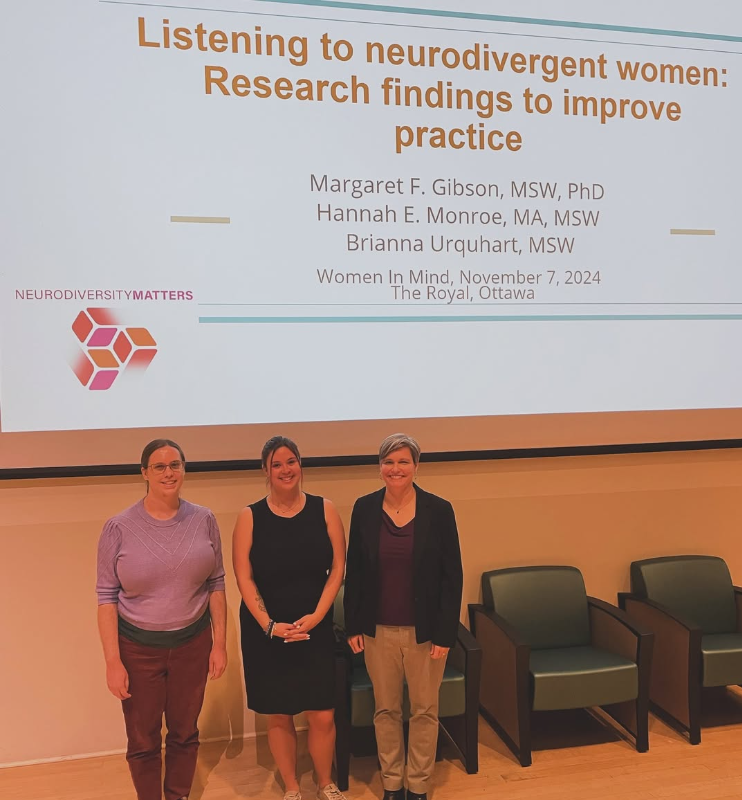
Listening to neurodivergent women: Research findings to improve practice
Margaret F. Gibson, Hannah E. Monroe, Brianna Urquhart
Presented at Women In Mind (Ottawa, ON. 2024)
-

Beyond caregiver burnout: Reimagining care in social work research
Brianna Urquhart
Presented at CASWE (Toronto, ON. 2023).
Abstract:
Why do we talk about the work that caregivers do as a "burden" and how does this framework limit our responses? This paper critically reviews current literature on informal care and analyzes interview data from the Reimagining Care/Work Policies study (P.I. Andrea Doucet, funded by a SSHRC Partnership grant) from a disability justice lens. As Canadian social workers navigate a healthcare crisis and straining social safety net, care needs are increasingly being met by family members. What care is, who provides it, and what impact it has become an urgent focus for researchers. We conducted a review of research literature on care work and compared our findings from interviews with families with disabilities. The existing literature relies heavily on the concept of “caregiver burden”, a term that reduces informal care to a unilateral, inherently negative, and highly individualized act. This characterization does not reflect the multidimensionality, multidirectionality, and systemic nature of care that was reported by interview participants. The people we interviewed often varied in their descriptions of what care meant in their families and how it affected them, and highlighted the ways in which their care was shaped by their social context. Workplace policies and systemic gaps emerged as opportunities for potential change. We argue that collective care frameworks developed by disability activists, along with theories of relational interdependence from Indigenous scholars, provide a useful resource when thinking about who engages in care, what caregivers do, and how we can respond.
-
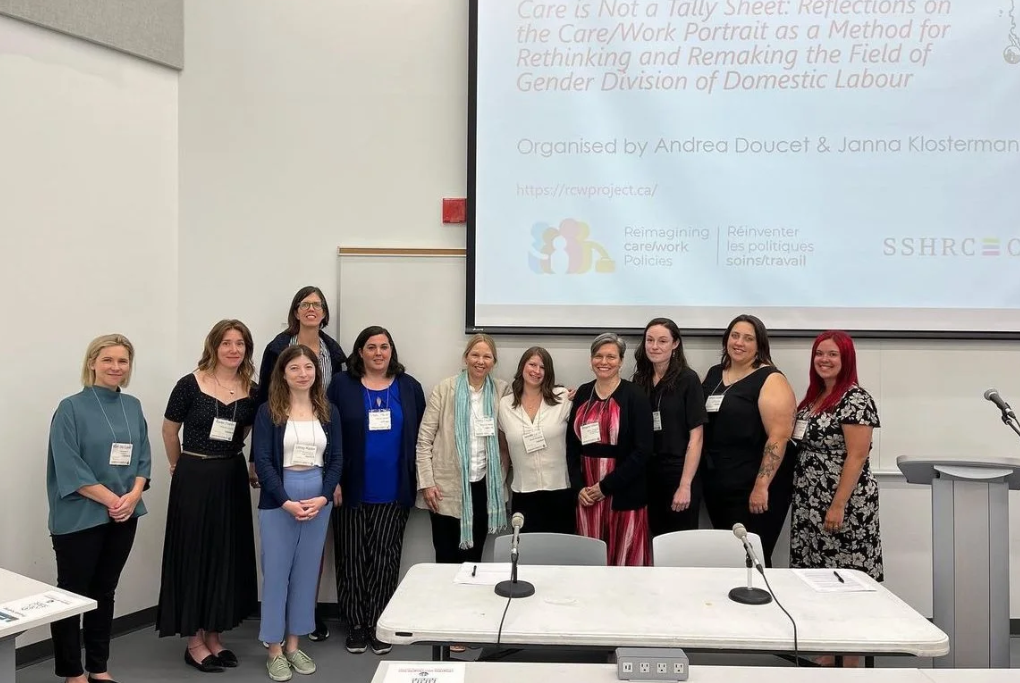
Care is Not a Tally Sheet: Reflections on the Care/Work Portrait as a Method for Rethinking and Remaking the Field of Gender Division of Domestic Labour.
Organized by Andrea Doucet & Janna Klostermann
Symposium at CSA (Toronto, ON. 2023)
-
Absences and (re)articulations: 2SLGBTQ families and care/work
Margaret F. Gibson, bridget livingstone, Jenna Cooper, Brianna Urquhart
Presented at CSA (Toronto, ON. 2023)
-

An ethnographic investigation into discourse, practice, and identity.
Gibson, M., Urquhart, B., livingstone, B., Monroe, H.E., Sakamoto, I.
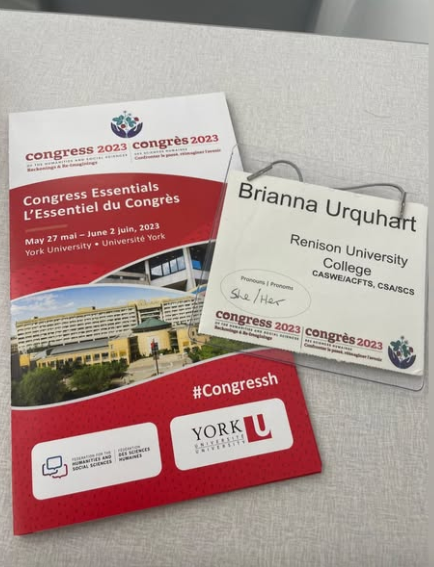
Presented at CASWE (Toronto, ON. 2023).
Other Presentations, Panels, & Events
-
Neurodiversity in the Field: Advanced Instructor Training
Margaret F. Gibson, Hannah Monroe, Brianna Urquhart
Presented at Wilfred Laurier University & Renison University College (03/06/24)
Recording Passcode: #qdU&4GC
-
Neurodiversity & Inclusion: A Panel Discussion
Brianna Urquhart (UW alumni), Margaret F. Gibson (UW faculty), Ray Kool (undergrad student), Marcus Chan (undergrad student)
Hosted by the Department of Knowledge Integration and the Anti-Oppressive Knowledge Integrators (University of Waterloo, 10/25/24)